Random Thought: Reconciliation

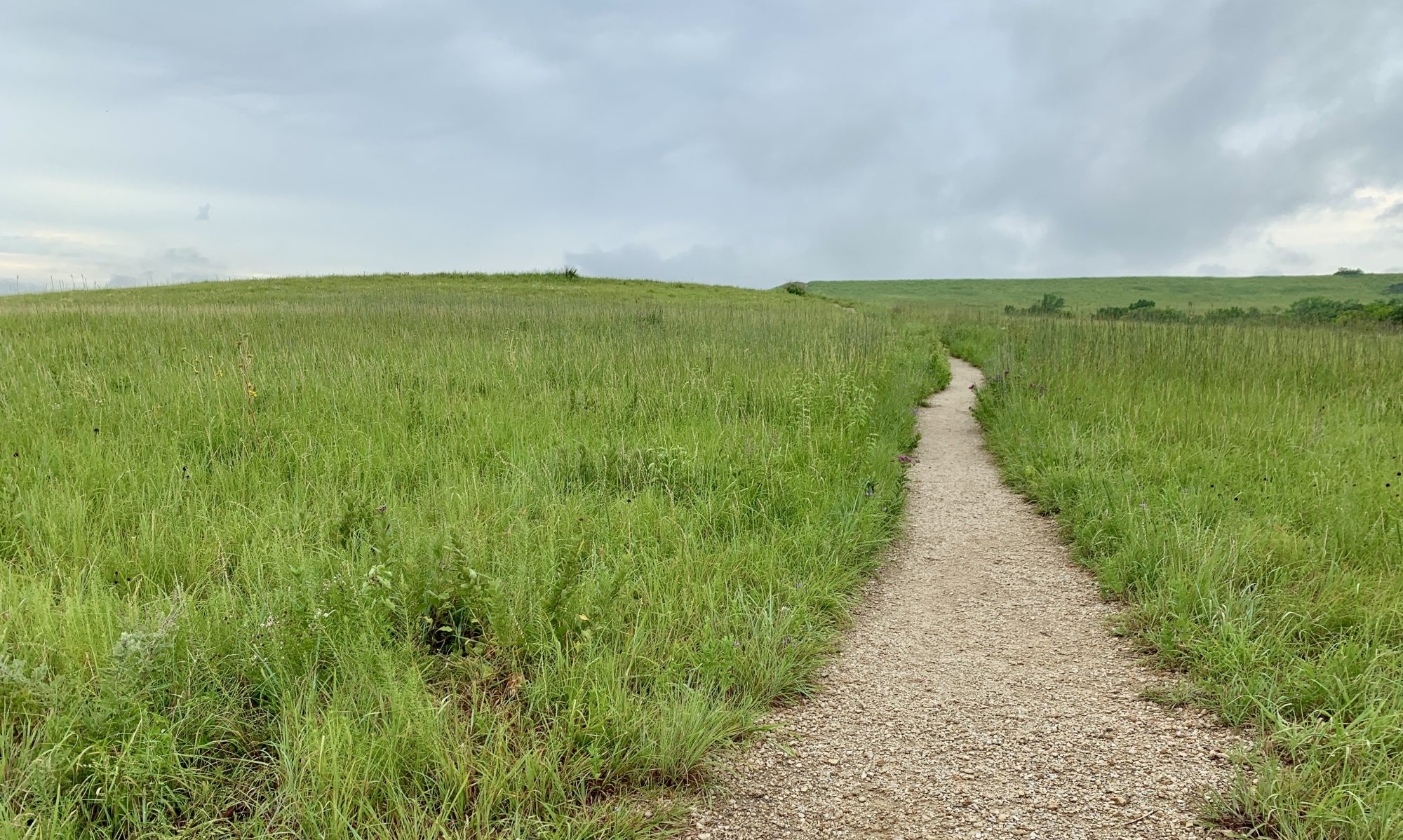
Part of our sinful condition is that we are often alienated from one another. Our relationships are fragile and easily ruptured. Once broken, our relationships are not easily repaired, but Christ calls us to seek reconciliation. Responding to that call means taking a risk.

It’s risky because it hurts to extend a hand in reconciliation and have it slapped away, but Christ calls us to a ministry of reconciliation (2 Corinthians 5.18*). And Christ, the open hand of God extended to all the human race, was himself “despised and rejected” (Isaiah 53.3). Yet again and again, even unto this very day, through the Holy Spirit, God reaches out to humanity offering forgiveness and extending an offer of reconciliation. Sometimes it is accepted, often it is rejected (sometimes even by those of us who have previously committed ourselves to accepting it), but, undaunted, God never ceases reaching out.

We are called to make God’s unrelenting love our example and guide; and to trust that God’s love is sufficient to pick us up when we get slapped down.

*All this is from God, who reconciled us to himself through Christ, and has given us the ministry of reconciliation. (NRSV)

Sermon — January 29, 2012

onair

Yesterday I preached the sermon”Loving God Back: The Practice of Passionate Worship.” The texts were Exodus 3.7-12, 8.1; Hebrews 10.19-25; and Luke 10.25-28. It was the second in our six part sermon series titled “Six Practices of Fruitful Living” which is based, somewhat loosely, on Five Practices of Fruitful Living by Robert Schnase. We’ve made enough changes that he may or may not want to be associated with it.I was happier with the way this sermon came off in the 10:50 service, but during that service, our recording equipment was locked in my office. So I’ve recorded a podcast version.

You can listen online at: coffeyvillefirstumc.org/podcasts

Voice of the Day: Rebecca Trotter

“I am fascinated with the creation stories.  … I may have also mentioned that I have both a very high regard for scripture and I value science as a tool for understanding how God’s other testimony – creation – works. Which right there creates a conflict which many people think they can make go away by picking the side that makes sense to them and hanging out there. But I always figured that if God made the world (which I believe he did) and scripture is true (which I believe it is – in all sorts of surprising ways) and science was saying something different, God had an answer.  …  Two true things cannot contradict one another. If they are in conflict, it doesn’t mean one is right and the other is wrong. It means we don’t understand them well enough yet.”

— Rebecca Trotter

I whole heartily endorse everything I’ve reprinted above and I agree with most of the rest of what she wrote for that post. You can read it in it’s entirety here.

Hat Tip: I was introduced to Rebecca Trotter by Mary Kai and as I read this article I was struck by how similar are the methods by which both women organize their thoughts.

A Unanimous Supreme Court Ruling

I’m thankful for the recent unanimous supreme court ruling, but I agree with the statement: “However, the ruling also puts more responsibility on The United Methodist Church to prevent discrimination and do justice in its hiring practices, say denominational leaders.” In my mind it’s analogous to the way I think about the Americans with Disabilities Act: as a church we’re not bound by it, but it is still an excellent source for guidelines on how to make our building accessible to all people.

Virginia Noble's Address

After a lot of failed attempts, I finally managed to contact Virginia Noble. she was in fine spirits and thankful for our prayers. I’m  thankful that I was finally able to get ahold of her and I’m also thankful to Louise Click who brought me her mailing address. We’ll print it in the Announcement Insert this Sunday.

Apple Fanboy Blues

As many of you know, I’ve long been a fan of Apple products. Our household has two Apple laptops and three iPod Touches. During the time that Jenny and I have been appointed as your pastors, the church has switched to Macs. Because Apple makes the products, I prefer, this article really bothers me.

I’m especially sad to hear that the aluminum unibody design that I love in Apple products is the cause of factory explosions and that the products I love are still made in less than humane conditions. These quotes at the end of the article haunt me:

“You can either manufacture in comfortable, worker-friendly factories, or you can reinvent the product every year, and make it better and faster and cheaper, which requires factories that seem harsh by American standards,” said a current Apple executive.

“And right now, customers care more about a new iPhone than working conditions in China.”

As I understand it, the automation involved in modern manufacturing means that improving working conditions would only slightly increase the retail cost of an Apple product, and Apple has one of the largest profit margins in the industry. As Christians we are obligated by our faith to care more about working conditions in China than new models and updated designs every year. (And seriously, I can’t keep up with all the improvements that are introduced with every new generation of Apple products anyway.)

I’m looking for a way to put my faith into practice. Suggestions?

Disclaimer: posted from a MacBook.

More Bibles Have Arrived

I’m happy to report that we ran out of Bibles for our new Bible project last Sunday. More are on the way. More arrived today. I’m excited that so many of you are looking forward to reading the New Testament during the 40 days of Lent and the Great 50 Days of Easter. I’m also thankful for all the people donating so that we can place a Bible in the hands of someone in need, that we, as a church, might provide assistance for spiritual as well as physical needs.

Sermon — January 22, 2012

onair

My sermon from today is now online at: coffeyvillefirstumc.org/podcasts.

The title was: “Receiving God’s Love: The Practice of Radical Hospitality” and the texts were John 3.1-17 and 1 John 4.16b-19

This was the first in our six part sermon series titled “Six Practices of Fruitful Living” which is based, somewhat loosely, on Five Practices of Fruitful Living by Robert Schnase. We’ve made enough changes that he may or may not want to be associated with it.

This sermon had more than 30 slides, which, sadly, are not available on an audio podcast. But I listened all the way through it and I think it still makes sense.

Bible Project

Last Thursday, January 19, 2012, at the Witness Work Area Meeting it was decided to embark on a multi-faceted Bible project. There is a new translation of the Bible, called the Common English Bible (CEB). A Rethink Church edition of the New Testament is being made available for $5 by United Methodist Communications (UMCom), which is encouraging United Methodists to buy a copy for themselves and donate $5 so that a copy might be provided for someone else. Inspired by their example, it was decided that we would encourage members and friends of First to follow their lead. Copies of this edition, which includes brief introductions to both the Bible and the United Methodist Church will soon be available for $5. You’re also encouraged to donate $5 so that we can hand one out to someone in need.

Now you may be asking yourself, “Why should I buy another New Testament. I’m perfectly happy to donate $5 to provide one for someone else, but why would I need one?” The answer is two-fold. First, we’re going to encourage members and friends of first to join us in reading through the New Testament in 90 days during the forty days of Lent and the Great Fifty Days of Easter (there is a handy guide in the UMCom edition which assists you in doing just that, but it will be made available elsewhere). Second, re-reading the Bible in an unfamiliar, yet accurate, translation helps us put ourselves in a place to hear the good news again for the very first time.

Additional Background Information: the CEB has been developed by several denominational publishers, including the United Methodist Publishing House. It’s translated at a seventh grade reading level, which will help make it accessible to anyone who receives one through the church’s various aid programs.

Sermon Series Update

This coming Sunday, Jenny will preach the first sermon of a six part series based on the book Five Practices of Fruitful Living by Bishop  Robert Schnase. We’ll be using the book for a Lenten book study later on in the year. The five practices we’ll be discussing are:  Radical Hospitality (welcoming God into our lives); Passionate Worship; Intentional Faith Development; Risk-Taking Mission and Service; and Extravagant Generosity. There are a copies of the book available in the main lobby.

Update: The book is called Five Practices of Fruitful Living, but we’ve decided to call the sermon series: “Six Practices of Fruitful Living.” We’re doing this because the sixth chapter of the book, titled “Fruitful Living and Offering God’s Love” concerns evangelism and that seems to us to be another practice of faithful Christians.

Voice of the Day: Brennan Manning

“Christianity doesn’t deny the reality of suffering and evil… Our hope… is not based on the idea that we are going to be free of pain and suffering. Rather, it is based on the conviction that we will triumph over suffering.”

— Brennan Manning

Hat Tip: Sojourners